


Charger for E-mobility
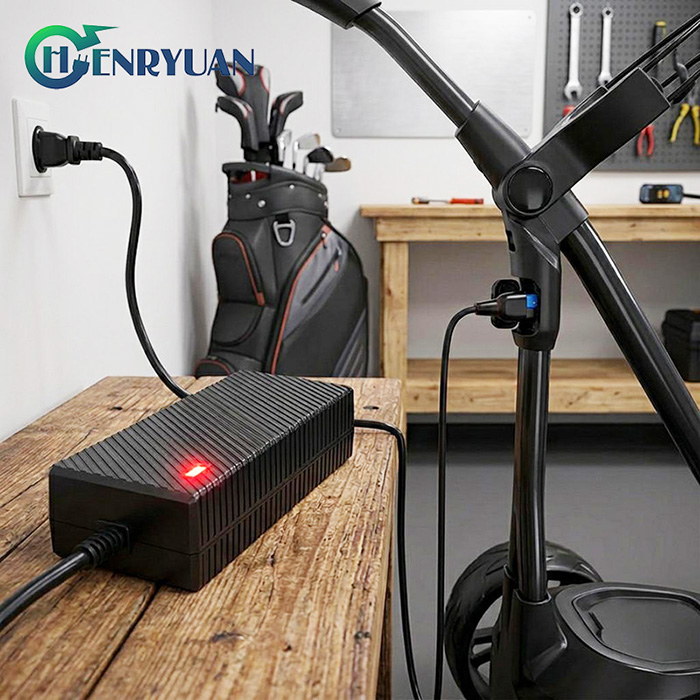
Battery Charger Solutions for Different E-mobility Systems
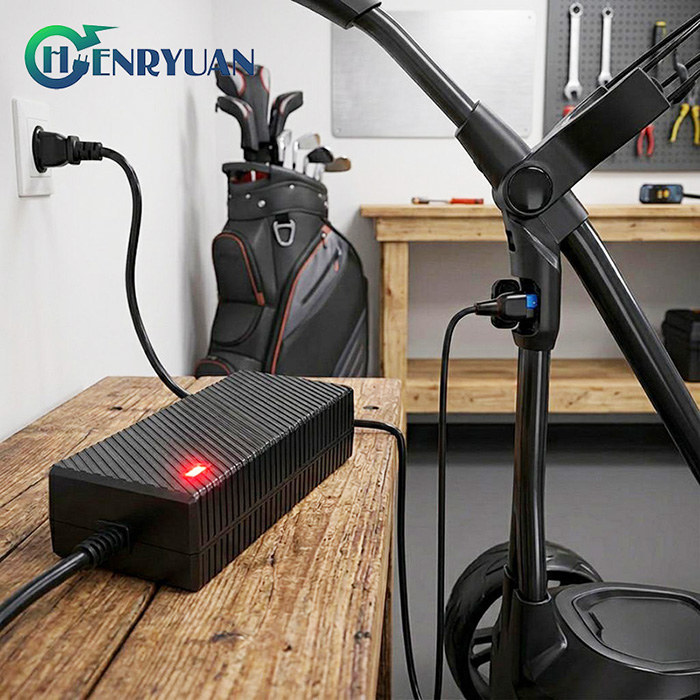
E-mobility products depend on a battery charging system that matches the battery chemistry, cell configuration, charging voltage, current, BMS, connector and intended operating environment. A charger that looks suitable based only on the battery's nominal voltage may not provide the correct charging profile or interface for the finished product.
Henryuan develops and manufactures battery chargers for e-bikes, e-scooters, outboard motors, underwater scooters, electric mobility equipment, golf cart, electric tricycle, battery-powered vehicles and other compact electric transportation systems. Standard and customized solutions are available for different battery configurations, charging currents, connectors, AC input requirements and regional plug types.
For OEM projects, the charger can be developed around the complete battery and equipment requirements rather than selected only from a standard voltage category.
Battery Charging Requirements for E-mobility
The correct charger should be selected according to the battery manufacturer's charging specifications. For lithium-ion battery packs, the charger's output voltage is determined by the number of cells connected in series, while the charging current depends on battery capacity, BMS limitations, thermal conditions and the required charging time.
For example, a 7S lithium-ion battery pack has a nominal voltage of 25.9V and requires a 29.4V charger for full charging. An 8S pack typically has a nominal voltage of 29.6V and requires a 33.6V charger. A 10S pack typically has a nominal voltage of 37V and requires a 42V charger.
When developing chargers for electric mobility devices, it is crucial to understand the battery pack configuration and the required charging voltage.
Some Common charger models for electric vehicles
|
Battery Chemistry |
Battery Configuration |
Henryuan Chargers For E-mobility |
|
24V Lithium-Ion Battery |
7S Li-Ion Pack |
|
|
29.4V 4A Outboard Motor Charger |
||
|
|
||
|
29.4V 7A Electric Tricycle Charger |
||
|
37V Lithium-Ion Battery |
10S Li-Ion Pack |
|
|
|
||
|
42V 4A Electric Tricycle Charger |
||
|
42V 5A Scooter Battery Charger |
||
|
42V 10A Outboard Motor Charger |
||
|
40.7V Lithium-Ion Battery |
11S Li-Ion Pack |
46.2V 4A Outboard Motor Charger |
|
44.4V Lithium-Ion Battery |
12S Li-Ion Pack |
50.4V 4A Underwater Scooter Charger |
|
48V Lithium-Ion Battery |
13S Li-Ion Pack |
54.6V 2A Electric Bike Charger |
|
54.6V 4A Electric Outboard Motor Charger |
||
|
60V Lithium-Ion Battery |
16S Li-Ion Pack |
|
|
12.8V LIFePO4 Battery |
4S LiFePO4 Pack |
|
|
25.6V LIFePO4 Battery |
8S LiFePO4 Pack |
|
|
25.6V LIFePO4 Battery |
8S LiFePO4 Pack |
|
|
54.8V LiFePO4 Battery |
15S LiFePO4 Pack |
|
|
24V Lead-Acid Battery |
|
|
Connector and Charging Cable Customization
The charging connector is an important part of an e-mobility charging system. Correct voltage and current specifications are not enough if the connector, polarity, pin configuration or cable does not match the equipment. Henryuan can customize charging connectors and cable assemblies according to the equipment design.
Charging Safety and Protection
E-mobility chargers may require multiple protection functions depending on the electrical architecture and end application.
Over-current protection.
Over-voltage protection.
Short-circuit protection.
Reverse-polarity protection.
Certifications for E-mobility Battery Chargers
Henryuan chargers support certifications and compliance requirements such as UL, cUL, ETL, CE, FCC, GS, UKCA, PSE, SAA, CCC, KC, CB and RoHS, where applicable to the specific product and market.
Frequently Asked Questions About E-mobility Battery Chargers
1. What charger do I need for an e-bike battery?
The charger must match the battery types, series-cell configuration, charging voltage, charging current and connector. For example, a typical 10S lithium-ion battery used in a 36V e-bike requires a 42V charger, while a 13S 48V lithium-ion battery requires a 54.6V charger.
2. Can I use a different charger for my e-scooter battery?
Only when the replacement charger has the correct charging voltage, current, charging profile, connector, polarity and other required electrical specifications. A charger should not be selected based only on the nominal battery voltage or connector appearance.
3. What is the difference between nominal battery voltage and charging voltage?
Nominal voltage is the operating voltage of a battery pack, while charging voltage is the maximum voltage the charger is designed to fully charge the battery. For example, a 10S lithium-ion battery is commonly described as a 36V battery but it requires a 42V charger for full charging.
3. Can the charger be customized?
Yes. Charging voltage, current , connector and also the cable can be specified according to battery capacity, BMS limits, required charging time and the structure design of the equipment.
4. Can Henryuan develop chargers for OEM e-mobility products?
Yes. Henryuan supports OEM and ODM charger development from specification review and prototype development through testing, certification and mass production. We have helped many clients on the professional e-mobility projects.
Request a Custom E-mobility Battery Charger
If you are developing or an e-bike, e-scooter, electric tricycle, mobility system or another battery-powered vehicle, or choosing a replacement chager, the following information helps determine the exact charger specification:
Battery chemistry, number of cells in series, nominal battery voltage, battery capacity, required charging voltage, required charging current, BMS charging-current limit, target charging time, AC plug type, DC charging connector, cable length and wire requirements, target market and certification requirements and expected annual quantity. Henryuan engineers can review the available battery and equipment information and help define the charger requirements.
Request an E-mobility Charger Solution
Browse Battery Chargers and Power Supplies


 Mail inquiry